 EN
EN

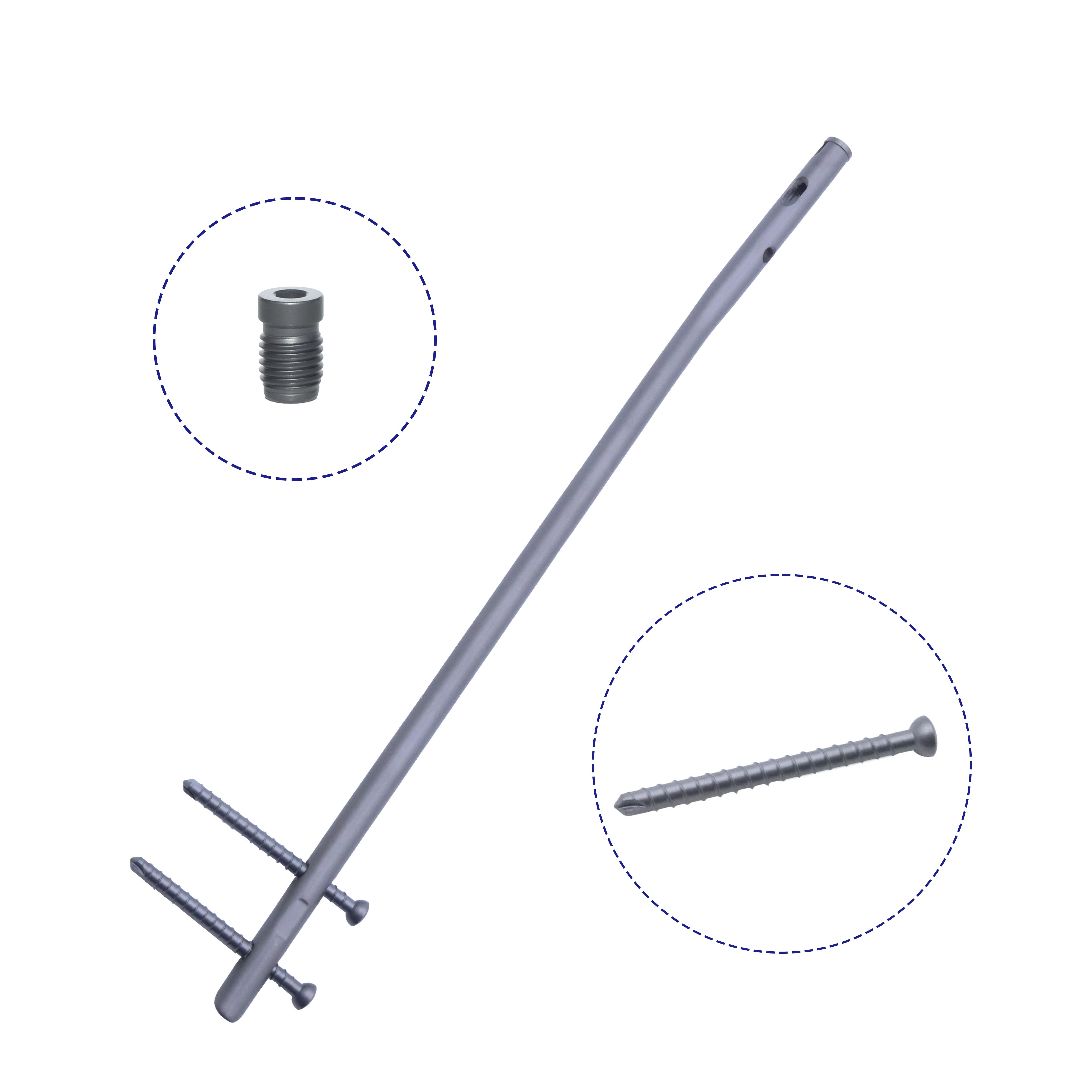
Tibial Intramedually Nail
| Brand | AOYE |
| Certificates | CE/ISO: 9001/ISO13485. Etc |
| Materials | Titanium |
| MOQ | 1 |
| OEM | Support |
| Lead Time | 7-21Days |
| Logistics | Door to Door,DHL、FedEx、UPS |
- Specification
- Description
- Advantages
- Application
- FAQ
- Recommended Products
| Specification | |
| Φ8Χ240 | Φ10x240 |
| Φ8x260 | Φ10x260 |
| Φ8x280 | Φ10x280 |
| Φ8x300 | Φ10x300 |
| Φ8x320 | Φ10x320 |
| Φ8x340 | Φ10x340 |
| Φ8x360 | Φ10x360 |
| Φ8x380 | Φ10x380 |
| Φ9Χ240 | Φ11x240 |
| Φ9x260 | Φ11x260 |
| Φ9x280 | Φ11x280 |
| Φ9x300 | Φ11x300 |
| Φ9x320 | Φ11x320 |
| Φ9x340 | Φ11x340 |
| Φ9x360 | Φ11x360 |
| Φ9x380 | Φ11x380 |
| LockingScrew:4.5*30,35,40,45,50,55,60,65,70,75,80,85,90mm Full-threaded | |
Description
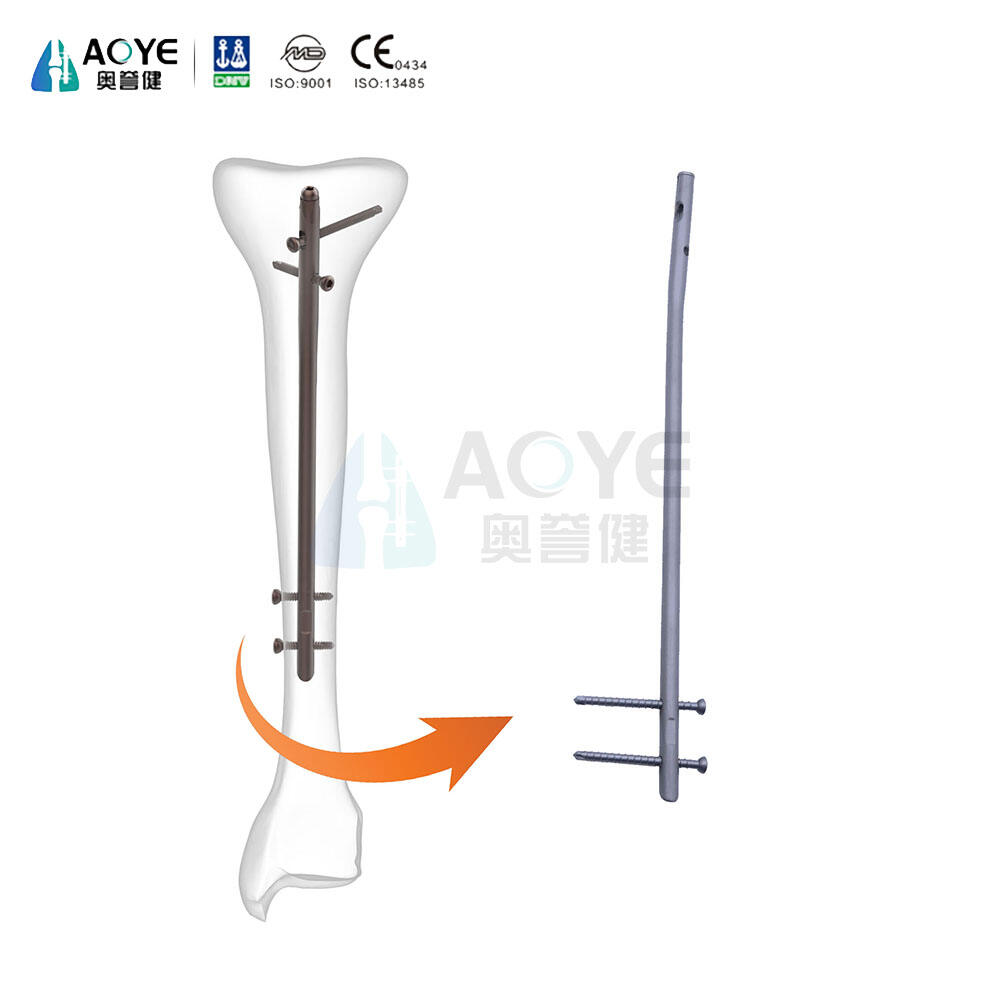
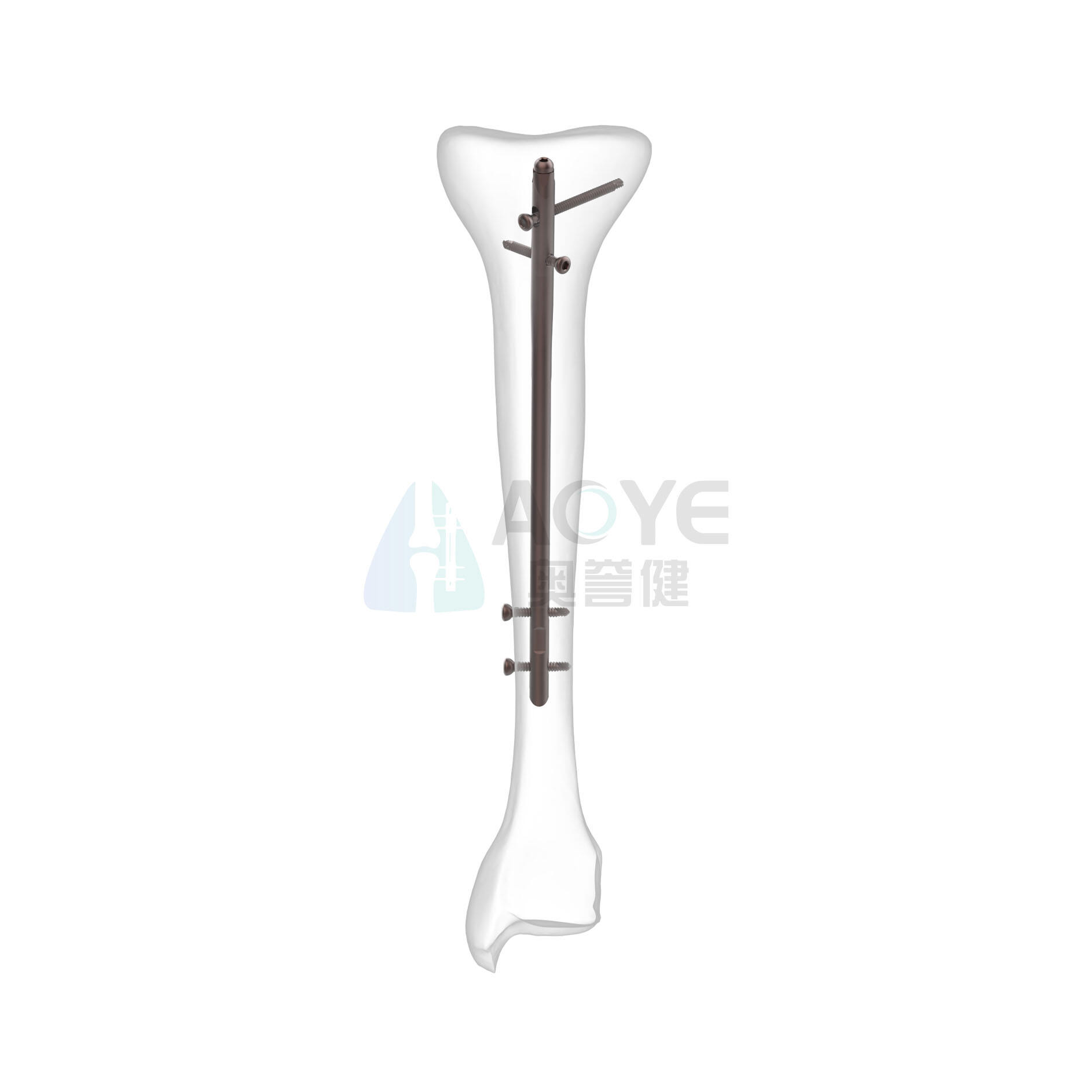
The Tibial Intramedullary Nail is a titanium alloy orthopedic implant designed for internal fixation of tibial fractures. Inserted into the medullary canal of the tibia, it acts as a load-sharing device, aligning the bone along its natural axis while providing stable internal support.
This intramedullary nail system is typically used with proximal and distal locking screws to achieve rotational and axial stability. Its design supports minimally invasive surgical techniques, helping preserve surrounding soft tissue and blood supply, which is critical for fracture healing. It is widely used in both simple and complex tibial fracture management.
Advantages
- Titanium alloy construction: Excellent biocompatibility, corrosion resistance, and high mechanical strength
- Load-sharing fixation principle: Promotes natural bone healing through controlled micro-motion
- Minimally invasive approach: Intramedullary insertion reduces soft tissue disruption
- Multi-planar locking system: Provides strong rotational and axial stability
- Anatomical design options: Available in various diameters and lengths for different patient anatomies
- Suitable for complex fractures: Effective in comminuted, segmental, and unstable fracture patterns
Application
- Tibial shaft fractures (transverse, oblique, spiral, comminuted)
- Segmental tibial fractures
- Proximal and distal tibial fractures (depending on nail design)
- Open and closed tibial fractures (as clinically indicated)
- Pathological fractures of the tibia
- Nonunion or delayed union cases
- Intramedullary nailing procedures in trauma surgery