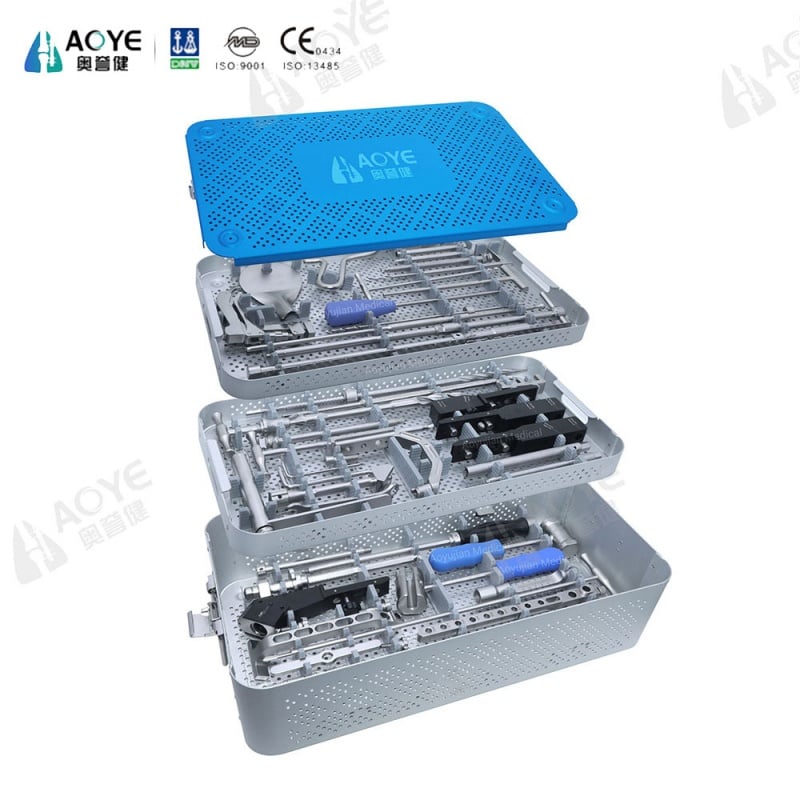
An ankle spanning external fixator is a critical orthopedic device used to stabilize fractures and support the healing process in the ankle region. For purchasing managers and healthcare providers, the selection of the right ilizarov external fixator involves various considerations, such as quality, cost, and application suitability. This article aims to provide insights into the key factors to evaluate when choosing an ankle spanning external fixator, cost considerations for bulk orders, installation guidance, common issues and solutions, and the applications of these Aoye devices in orthopedic surgery.
Selecting an ankle spanning external fixator requires careful evaluation of several factors. First, consider the material used in the fixator. Most external fixators are made from lightweight yet durable materials like titanium or aluminum, which offer strength without adding unnecessary weight. The choice of material directly impacts the device's performance and the patient's comfort during recovery.
Next, assess the design specifications. The fixator should accommodate the specific anatomy of the patient while providing adequate stability. Features such as adjustable rods and clamps are essential for customization, allowing for a tailored fit that meets individual needs. Additionally, consider the load-bearing capacity of the fixator, as it must support the patient's weight and any additional stress during movement.
Finally, verify the certifications of the manufacturer, such as ISO13485 and CE marking. These certifications indicate compliance with international quality standards, ensuring the safety and efficacy of the product. As a reputable manufacturer, Aoyujian Medical has established itself in the industry by meeting these regulatory requirements.
When contemplating bulk orders of ankle spanning external fixators, several cost factors come into play. Material costs are a significant component, as high-quality materials tend to have higher prices but can save costs in the long run by reducing the risk of complications and additional procedures.
Production capacity and lead times are also critical. Understanding the manufacturer’s capacity to fulfill large orders can help in negotiating better pricing. Aoyujian Medical, for instance, can accommodate varying order sizes, which may allow for pricing flexibility based on volume.
Additionally, consider the packaging methods and shipping costs. Efficient packaging can reduce shipping expenses and minimize the risk of damage during transit. It’s advisable to discuss these logistics with your supplier to ensure that the overall cost aligns with your budget.
Proper installation of Aoye ankle spanning external fixators is crucial to ensure optimal performance and patient safety. Begin with a thorough site assessment to evaluate the patient's anatomy and the specific requirements for the fixator. This step is vital in determining the correct positioning and alignment of the device.
During installation, follow the manufacturer's guidelines carefully. This typically involves securing the fixator to the bone using pins or screws, ensuring that they are positioned at appropriate angles to provide maximum stability. It is essential to maintain sterility throughout the procedure to reduce the risk of infection.
Training for medical staff on the proper installation techniques can greatly enhance the success rate of the orthofix external fixator. Regular workshops or training sessions can be beneficial, as they keep the surgical team updated on the latest techniques and best practices.
Despite their effectiveness, ankle spanning external fixators can present several challenges. One common issue is pin site infections, which can occur at the entry points where the fixator connects to the bone. To mitigate this risk, it is crucial to follow strict hygiene protocols and monitor the sites regularly for signs of infection.
Another challenge is mechanical failure, which can arise if the fixator is not properly secured or if the wrong size is used. Regular assessments of the device's integrity are necessary, and if any issues are detected, timely intervention is essential. Conducting routine checks can help identify any loosening of the pins or instability in the structure.
Lastly, patients may experience discomfort due to the fixator's weight or positioning. Ensuring that the device is adjusted correctly and fits well can alleviate some of this discomfort. Providing patients with comprehensive care instructions can also enhance their experience during recovery.
Aoye ankle spanning external fixators are primarily utilized in orthopedic surgery for stabilizing complex fractures and maintaining limb alignment during the healing process. They are particularly beneficial in cases where traditional casting is insufficient, such as in open fractures or when soft tissue integrity is compromised.
These fixators are also employed in limb lengthening procedures, where gradual adjustment of the fixator can promote bone growth. Their versatility allows them to be used in various surgical scenarios, making them an essential tool for orthopedic surgeons.
Moreover, the application of ankle spanning external fixators extends to trauma care and sports medicine, where quick stabilization of injuries is critical. Their ability to provide robust support while allowing for some degree of movement can facilitate a faster recovery and rehabilitation process for patients.
In summary, understanding the various factors involved in selecting and using external fixation instruments can significantly impact patient outcomes and operational efficiency. By addressing material selection, cost considerations, installation practices, common challenges, and diverse applications, healthcare providers can make informed decisions that enhance the quality of care delivered to patients.
Aoyujian Medical Technology provides trusted orthopedic solutions, high-quality implants, OEM/ODM services, and global shipping for hospitals & distributors.
No. 2 Changting Road, Gehu Farm, Wujin Economic Development Zone, Changzhou, Jiangsu, China
Copyright © Aoyujian Medical Technology (Changzhou) Co., Ltd. All Rights Reserved - Privacy Policy - Blog
 EN