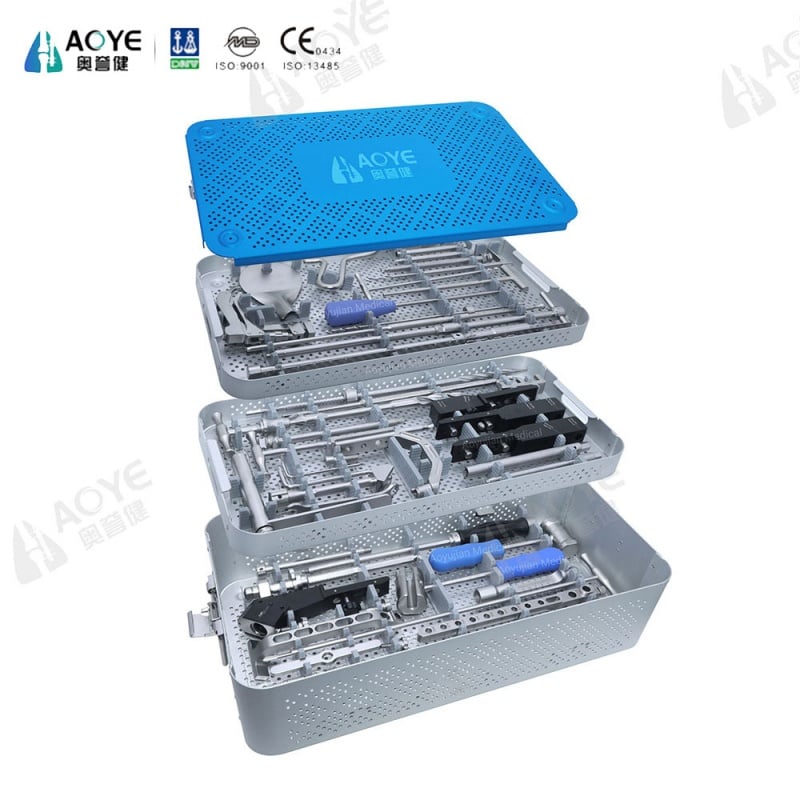
Understanding femoral interlocking nails is crucial for B2B buyers involved in sourcing orthopedic implants. These specialized Aoye interlocking tibia nail play a vital role in stabilizing fractures in the femur, and ensuring their quality and specifications are paramount for effective patient outcomes. This article will address key factors that wholesale buyers should consider, including specifications, quality aspects, cost implications, installation guidance, and common challenges associated with femoral interlocking nails.
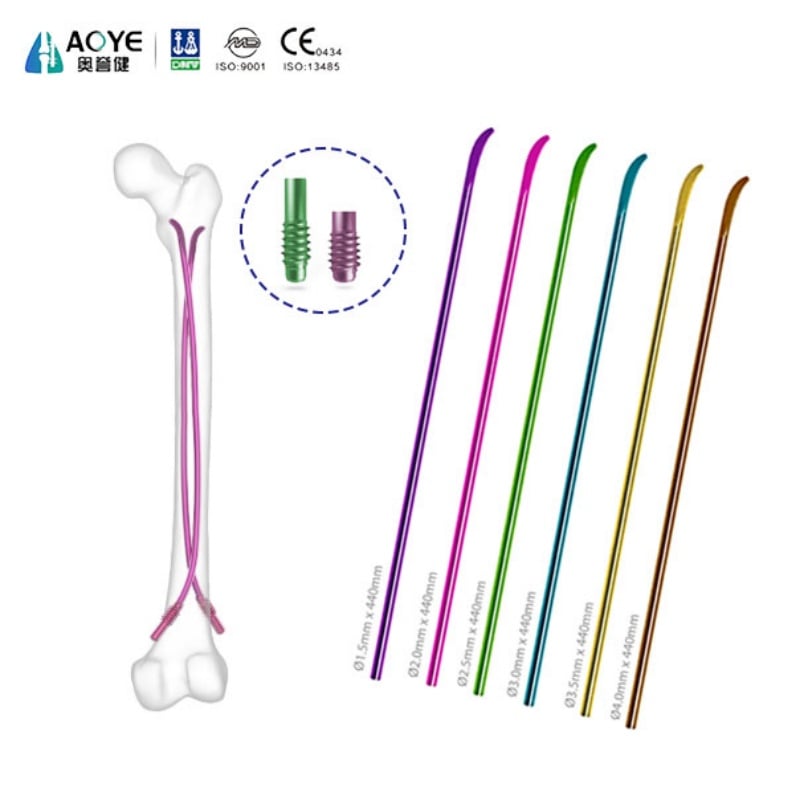
Femoral interlocking nails come in various specifications that significantly impact their performance and suitability for specific applications. Key specifications include length, diameter, and locking mechanism type. Typically, these Aoye intramedullary interlocking nail tibia range from 9 to 12 mm in diameter and can vary in length from 200 to 450 mm, depending on the fracture type and patient anatomy.
Material selection is also critical; these nails are commonly made from titanium or stainless steel due to their strength, corrosion resistance, and biocompatibility. Aoyujian Medical manufactures nails that comply with international standards such as ISO13485, ensuring that the materials used meet stringent quality requirements.
Buyers should assess the technical parameters, including the nail's load-bearing capacity, which is essential for ensuring that the fixation will maintain stability under physiological loads. Understanding these specifications of Aoye humerus interlocking nail will help buyers make informed decisions that align with their application needs.
Quality is paramount when sourcing femoral interlocking nails, as it directly affects patient safety and surgical outcomes. Key quality factors include:
Material Integrity: Ensure that the nails are made from high-grade materials like medical-grade titanium or stainless steel, which offer superior strength and compatibility with human tissue.
Manufacturing Processes: Investigate the manufacturing capabilities of the supplier. Aoyujian Medical utilizes advanced CNC machining and rigorous quality control processes to ensure precision and consistency in each product.
Certifications: Verify that the supplier holds relevant certifications such as ISO13485 and CE marking. These certifications indicate compliance with international quality management standards, which are crucial for medical devices.
Performance Testing: Request detailed reports on the performance testing of the femoral interlocking nails, including fatigue and tensile strength tests. This data provides insights into the nails' reliability and durability.
Understanding these quality factors will aid buyers in selecting a supplier that prioritizes safety and efficacy in their orthopedic products.
Cost is a significant factor for B2B buyers when placing bulk orders of femoral interlocking nails. The price can vary based on several elements, including material costs, manufacturing complexity, and order quantity. Generally, larger orders can lead to reduced unit prices due to economies of scale.
Buyers should also consider the total cost of ownership, which includes not only the purchase price but also shipping costs, potential import duties, and any additional fees for customization. For instance, if custom sizes or specific threading patterns are required, these will impact the overall cost.
It is advisable to request quotations from multiple suppliers, taking into account their pricing structure, minimum order quantities (MOQs), and lead times. This approach allows buyers to compare and evaluate the best options that meet their budget and operational needs.
Proper installation of femoral interlocking nails is crucial for achieving optimal outcomes in surgical procedures. Surgeons should follow best practices, including:
Preoperative Planning: Surgeons must evaluate the fracture type and patient anatomy before selecting the nail type and size. This ensures that the selected nail provides adequate stability and alignment.
Surgical Technique: Familiarity with the specific locking mechanism of the nail is vital. Surgeons should ensure proper insertion angles and locking techniques to maximize fixation strength.
Postoperative Care: After the installation, monitoring for complications such as infection or non-union is essential. Surgeons should educate patients on postoperative care to ensure proper healing.
Aoyujian Medical can provide installation guidelines and support to ensure that healthcare professionals are well-equipped to use their products effectively.
Despite their effectiveness, femoral interlocking nails can encounter several challenges during use. Common problems include:
Malalignment: This may occur if the nail is not inserted correctly, leading to improper healing. To mitigate this risk, thorough preoperative planning and careful surgical technique are essential.
Infection: The risk of infection is a concern with any surgical implant. Utilizing high-quality materials and adhering to strict sterilization protocols can significantly reduce this risk.
Non-union: In some cases, fractures may fail to heal properly. Factors such as inadequate stabilization or poor patient compliance with rehabilitation can contribute to this issue. Ensuring that the nail is properly locked and educating the patient on postoperative care can help prevent non-union.
Identifying potential problems early and implementing effective solutions will enhance the success rate of surgeries involving femoral interlocking nails.
In summary, understanding the specifications, quality factors, cost considerations, installation guidance, and common problems associated with femoral interlocking nails is essential for B2B buyers in the orthopedic field. By leveraging this information, purchasing managers and decision-makers can make informed choices that enhance patient outcomes and operational efficiency.
Aoyujian Medical Technology provides trusted orthopedic solutions, high-quality implants, OEM/ODM services, and global shipping for hospitals & distributors.
No. 2 Changting Road, Gehu Farm, Wujin Economic Development Zone, Changzhou, Jiangsu, China
Copyright © Aoyujian Medical Technology (Changzhou) Co., Ltd. All Rights Reserved - Privacy Policy - Blog
 EN